
- Home
- Tube Expansion
Process : Tube-to-Tube sheet Expansion (Mechanical/Hydraulic)
Product in Focus : IRMCO 980-080B (Water-Soluble Lubricant)
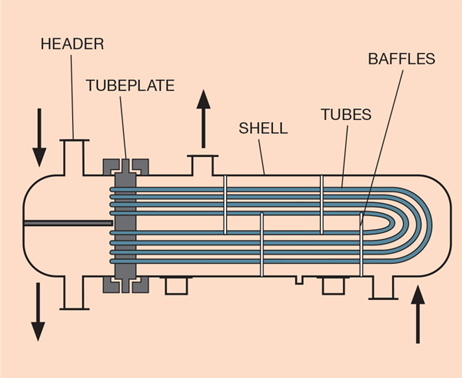
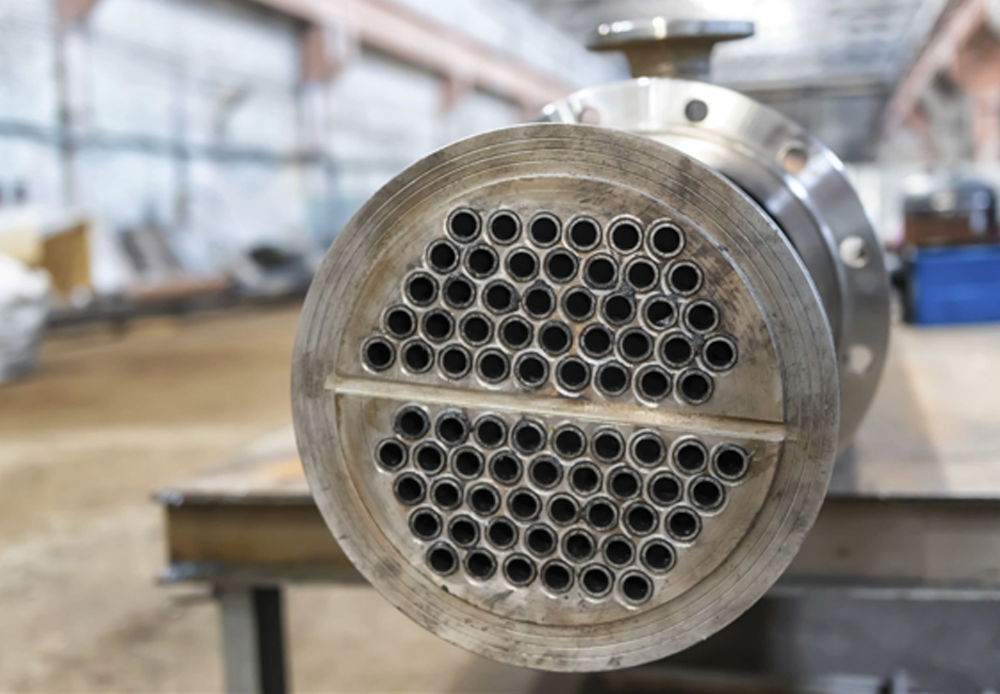
Heat exchangers rely on hundreds, sometimes thousands, of individual tubes tightly sealed into a heavy metal tube sheet. The most critical mechanical process in assembling these units is tube expansion—the cold-working of the tube ends to plastically deform them against the tube sheet holes, creating a pressure-tight, leak-proof joint.
Because this process involves immense localized friction and pressure, the choice of lubricant dictates the quality of the seal, the lifespan of the tooling, and the efficiency of downstream processes like welding.
The Tube Expansion Process
Achieving a uniform, secure joint requires strict adherence to dimensional tolerances and sequential execution. Misordering these steps or applying incorrect pressure can lead to under-expansion (causing leaks) or over-expansion (weakening the structural integrity of the tube).
Preparation and Sizing : Critical for calculating clearance
The tube sheet holes are drilled, reamed, and deburred. Operators measure the exact inner diameter (ID) of the hole and the outer diameter (OD) of the tube to calculate the precise clearance and the required percentage of wall thinning (typically 5% to 10% for steel heat exchangers).
Lubricant Application
IRMCO 980-080B is applied to the inner diameter of the tube end and directly onto the rollers and mandrel of the mechanical tube expander. Uniform application is required to prevent galling during metal-to-metal contact.
Tube Insertion and Alignment
The tubes are inserted through the baffle plates and into the tube sheet. The ends are positioned so they sit flush with, or slightly protrude from, the outer face of the tube sheet, depending on the joint design.
Mechanical Rolling
The tube expander is inserted. As the tapered mandrel is driven forward (pneumatically, electrically, or hydraulically), it forces the rollers outward. This cold-works the tube, pressing it firmly against the tube sheet hole until the calculated inner diameter is reached.
Post-Expansion Inspection
The final expanded inner diameter is measured to verify the correct percentage of wall reduction. If seal-welding is required after expansion, the joint is cleaned of all remaining lubricant.
How it works with IRMCO
During mechanical rolling, the expander's rollers generate extreme friction against the tube's inner wall. If unlubricated or poorly lubricated, the metal can flake, gall, or crack, ruining both the tube and the expensive expanding tool.
IRMCO 980-080B is an advanced water-soluble lubricant engineered specifically for heavy-duty tube forming and expansion. Unlike traditional heavy forming oils, it utilizes a polymer-based chemistry that provides exceptional boundary lubrication while remaining completely water-miscible
Advantages of Using Water-Soluble Lubricants
Transitioning to a water-soluble formulation like IRMCO 980-080B offers distinct operational and quality advantages over traditional petroleum-based oils:
|
Advantage |
Manufacturing Impact |
|
Superior Cleanability |
Washes off easily with mild alkaline cleaners or plain water. This is critical if the tubes require subsequent seal-welding, as residual hydrocarbon oils cause weld porosity and carbon-inclusion defects. |
|
Extended Tool Life |
High-lubricity polymers create a resilient barrier between the expander rollers and the tube wall, significantly reducing wear on the mandrel and cage assembly. |
|
Uniform Expansion |
Provides consistent slip throughout the rolling process, preventing the tool from binding or skipping. This ensures an even, perfectly round expansion and prevents localized thinning. |
|
Thermal Dissipation |
Because the carrier is water, the lubricant naturally absorbs and dissipates the high heat generated by the cold-working process better than straight oils. |
|
Operator Safety & Environment |
Free of hazardous solvents, chlorine, and heavy sulfur. It eliminates the smoke and volatile organic compounds (VOCs) typically associated with oil-based lubricants in high-heat manufacturing. |
By utilizing IRMCO 980-080B, manufacturers can achieve tighter, more reliable tube-to-tube sheet joints while reducing tool replacement costs and streamlining post-expansion cleaning processes.