
- Home
- Rust Prevention
Causes and Effects of Rust in Sea Export
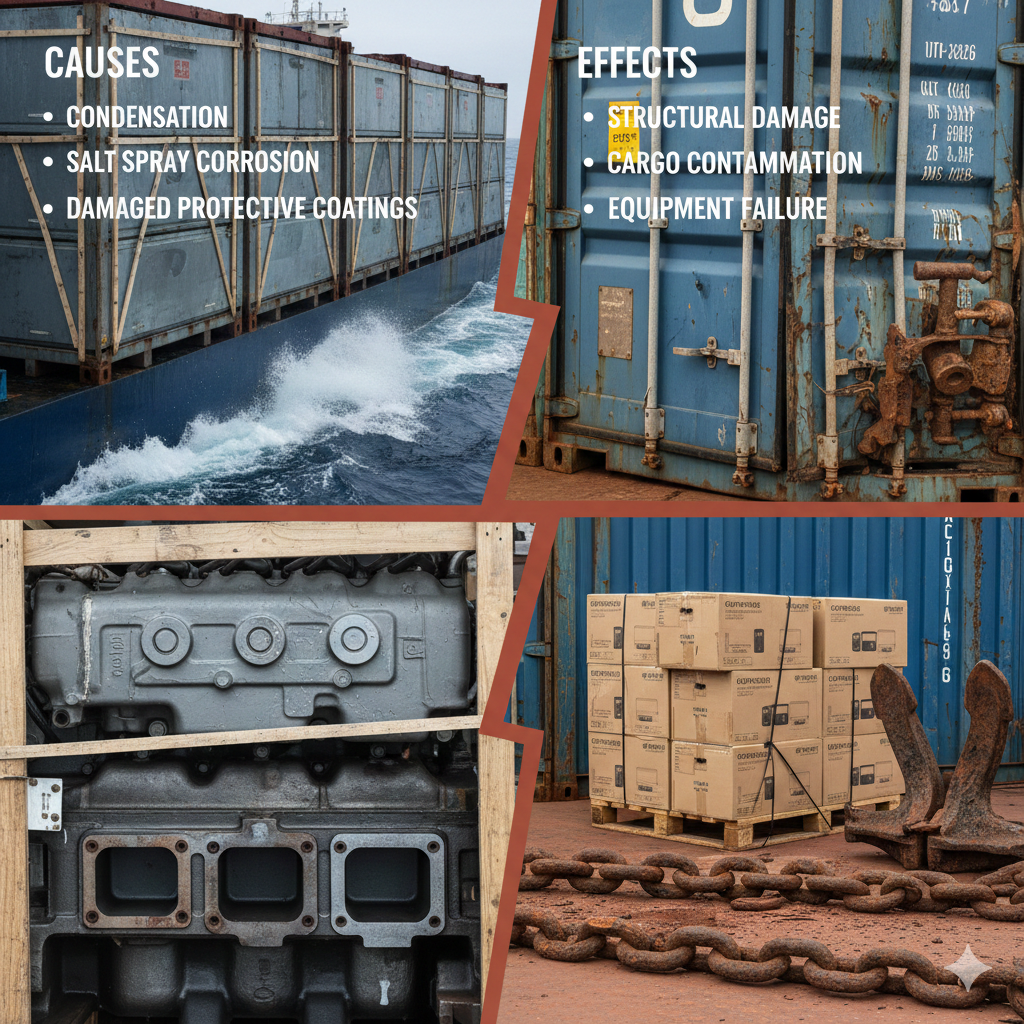
The Root Causes
- Salt-Water Aerosols: Seawater contains sodium chloride (NaCl), which acts as a powerful electrolyte. It accelerates the electrochemical reaction of rusting by facilitating the flow of electrons between the metal and the environment.
- "Container Rain": As temperatures drop at night, moisture inside the shipping container condenses on the ceiling and "rains" down onto the cargo. This cycle of wetting and drying is highly corrosive.
- Hygroscopic Packaging: If wood pallets or cardboard boxes are damp when loaded, they release moisture into the sealed container, raising the internal humidity to critical levels (above 60%).
- Surface Contamination: Fingerprints (salt and oils from skin) or residual machining fluids can act as "magnets" for moisture, creating localized pitting.
The Effects on Business
- Material Loss: Severe rust can weaken structural integrity or ruin the precision tolerances of machined parts.
- Financial Penalties: Costs include insurance claims, rejected shipments, and the expense of "re-working" or de-rusting parts at the destination.
- Brand Damage: Receiving a rusted shipment creates a perception of poor quality and lack of care in the supply chain.
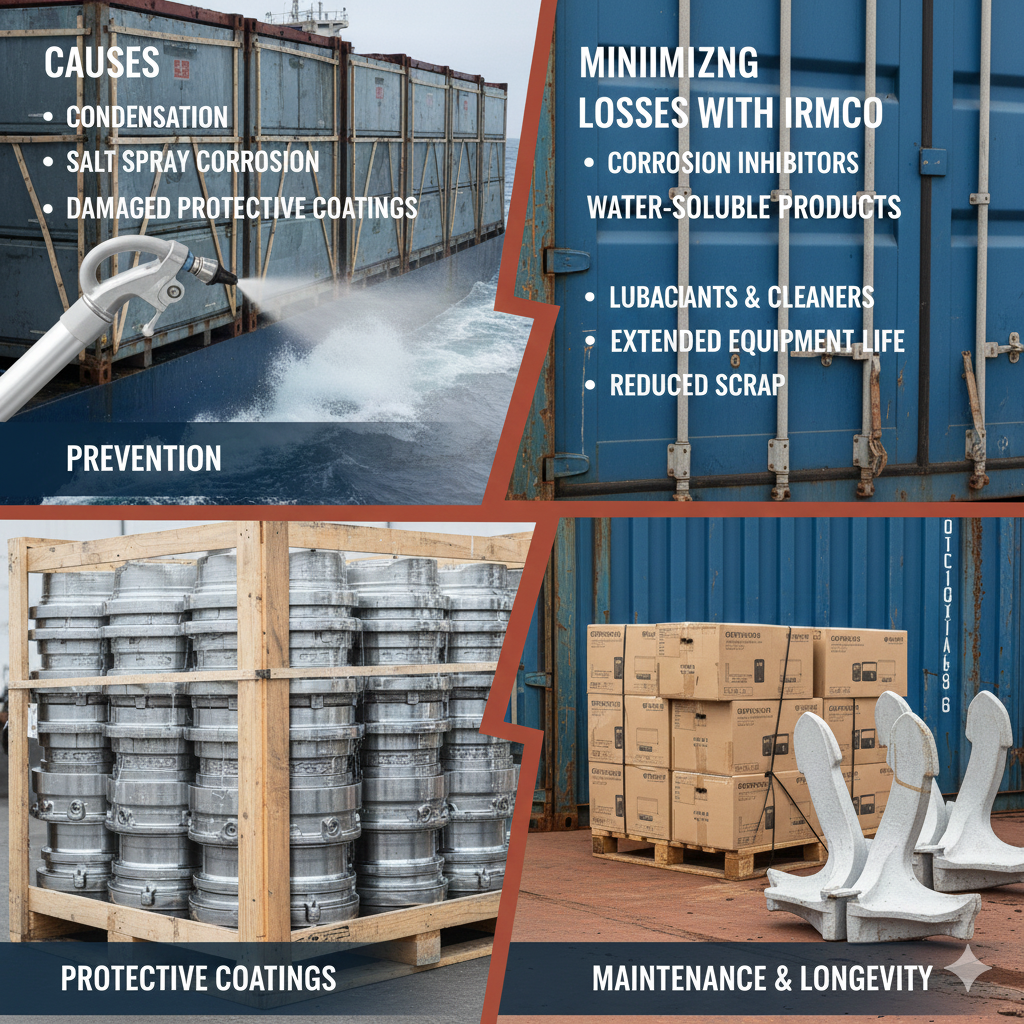
Minimizing Losses with IRMCO Water-Soluble Products
Unlike traditional oil-based rust preventatives (RPs) that are messy and hard to remove, IRMCO specializes in oil-free, water-soluble chemistry. These products are designed to provide robust protection while streamlining the "Lean" manufacturing process.
Key IRMCO Solutions for Export
| Product / Category | Function | Export Benefit |
|---|---|---|
| IRMCO 980-819D | Cleaner & Rust Inhibitor | A 2-in-1 product that removes mill oils while leaving a thin, protective alkaline film. |
| IRMCO 819-000 | Tool & Part Protector | Specifically designed for indoor/sheltered storage and transportation protection. |
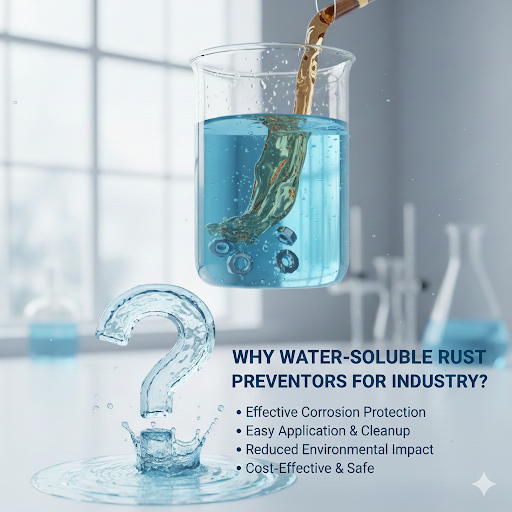
Why Water-Soluble?
- Oil-Free Surface: IRMCO products leave a "dry-to-the-touch" or non-tacky film. This prevents dust and salt particles from sticking to the metal during the loading process.
- Ease of Removal:At the destination, the film can be removed with plain water (43°C/110°F) or a mild alkaline wash, eliminating the need for hazardous solvent degreasers.
- Compatibility: They are designed to be "weld-through," meaning if parts need assembly at the destination, they often don't require pre-cleaning.
Key Aspects of the Process
To maximize the effectiveness of IRMCO products for overseas shipping, follow this process:
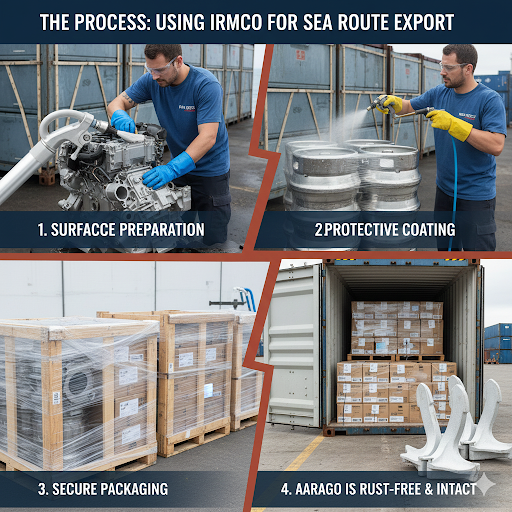
Stage 1: Precision Cleaning
Use an alkaline cleaner like IRMCO 980-819D. This ensures that no "acidic" residues or fingerprints are trapped under the protective layer.
Stage 2: Application of the Protective Film
Method:Can be applied via spray, immersion, or roller coater.
Concentration:For sea export, use a higher concentration (refer to the IRMCO Product Application Guide) to ensure a more robust barrier against salt air.
Stage 3: Complete Drying
This is the most critical step. Parts must be 100% dry before they are packed.
Stage 4: CIntegrated Packaging (VCI)
For sea routes, use IRMCO-treated parts in conjunction with VCI (Vapor Corrosion Inhibitor) poly-bags. The IRMCO film provides the primary physical barrier, while the VCI emits protective vapors that reach recessed areas and neutralize the "container rain" effect.